
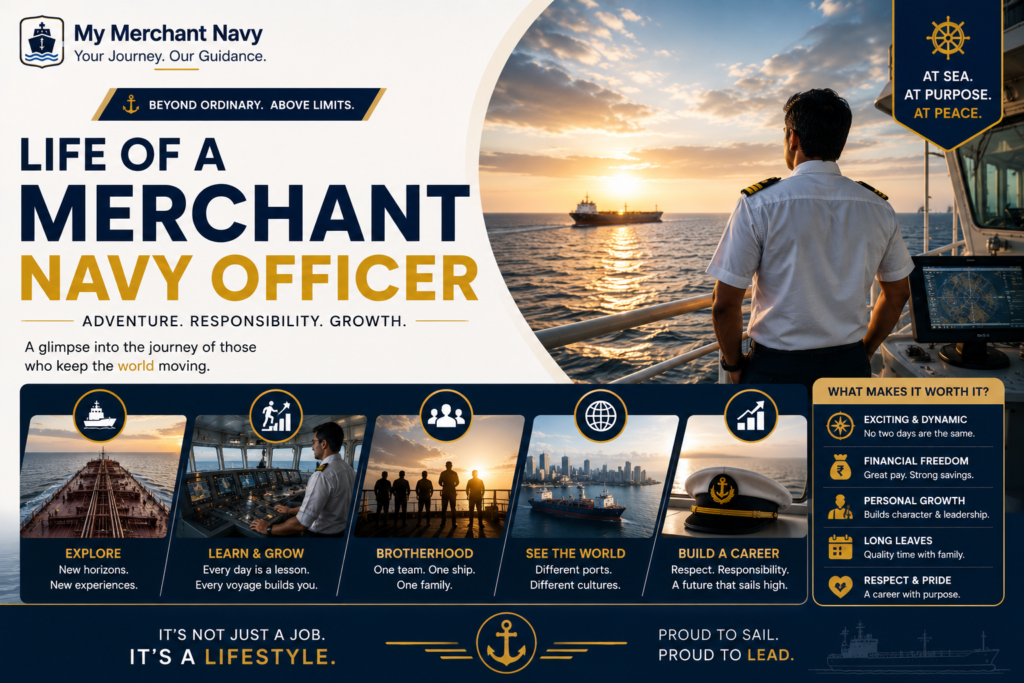
Life at sea runs on a watch system, not a 9-to-5 schedule — ships operate 24/7, and someone is always on duty regardless of the hour. A typical day starts early, often around 6 AM, with officers heading to the bridge or engine room for their watch. Deck officers commonly follow a 4-on/8-off rotation — four hours on watch, eight hours off — repeated around the clock, while engineers often work more fixed day shifts with additional emergency/call-out duties as needed. There’s no concept of a weekend at sea; work continues daily, though rest hours are internationally regulated to a minimum of 10 hours in any 24-hour period under STCW rules.
A typical watch involves monitoring the ship’s position, speed, and course, overseeing cargo operations, supervising crew, inspecting machinery, and ensuring safety protocols are followed. Before and during port calls specifically, workloads intensify — checks on lifeboats, firefighting gear, anchors, and mooring equipment all need to happen alongside cargo discharge and coordination with port authorities, often stretching a workday to 10–12 hours.
Responsibilities scale up meaningfully with rank in every department — a Deck Cadet assists with paperwork and learns the ropes, while a Captain carries ultimate legal responsibility for the vessel, cargo, and crew.
Unlike a land-based job, merchant navy work runs on a contract-and-leave cycle rather than continuous employment. A typical contract lasts 3–9 months, depending on vessel type, rank, and company policy, followed by 2–4 months of paid leave at home. This rotation is one of the career’s defining features — seafarers effectively work in concentrated blocks and then get extended time off, rather than spreading work across the year the way a land-based job does.
This structure cuts both ways. It means genuinely long, uninterrupted stretches away from family — commonly 4–9 months per contract — but it also means extended vacation periods most land-based careers can’t match, which many officers cite as one of the career’s biggest draws.
Off-watch time is real but limited, and how officers use it varies. Common ways crew stay engaged include workouts in the ship’s gym, reading, online courses, and simple socialising with crewmates — since your crew effectively becomes your temporary community for the length of the contract. Simple land-life pleasures — a walk outside, a home-cooked meal, unrestricted internet — are largely unavailable at sea, which is a real adjustment for first-time cadets more than anything else.
Shore leave during port calls offers a welcome, if short, break — a chance to step off the ship, explore a new city, and reset before the next stretch of watches. It’s also one of the more romanticised aspects of the job: breakfast in Singapore and dinner mid-transit through the Malacca Strait genuinely happens, and for people with a strong pull toward travel, that’s a real and rare perk few careers offer.
It’s worth being direct about the parts of this career that don’t show up in a recruitment brochure:
Some companies do allow senior officers — typically from Second Officer or Chief Engineer rank upward — to bring their spouse aboard for part of a contract, which helps offset the family-separation strain for those who reach that seniority.
The honest answer: it depends heavily on temperament, not just interest in ships or travel. This career rewards people who genuinely value financial independence, structure, and long blocks of uninterrupted focus, and who can handle real stretches of isolation without it eroding their wellbeing. It’s less suited to people who prioritise routine proximity to family, need constant social contact, or struggle with confined, high-pressure environments for extended periods. Talking to serving or recently-returned officers before committing — rather than relying purely on institute marketing — is genuinely one of the better ways to gauge fit, since the lifestyle differences between “sounds exciting” and “is sustainable for me” only become clear once you hear it from someone who’s actually lived it.
The day-to-day experience of this career isn’t static — it shifts meaningfully as officers move up the rank ladder. A Deck or Engine Cadet’s life is mostly about learning, assisting, and adjusting to the routine itself; the workload is real but the responsibility is bounded. By the time an officer reaches Chief Officer or Second Engineer, the job becomes far more managerial — coordinating teams, owning safety compliance, and absorbing pressure from both the Captain/Chief Engineer above and the junior officers below. At the Captain or Chief Engineer level, the lifestyle shifts again: greater autonomy and respect on board, but also the weight of final legal responsibility for the vessel, which several officers describe as a different kind of pressure than the physical demands of junior ranks. Understanding that the lifestyle evolves — rather than assuming your first contract as a cadet represents the whole career — is useful context for anyone evaluating whether this path suits them long-term.
Typically 3–9 months at sea, followed by 2–4 months of leave, though this varies by rank, vessel type, and company policy.
Many companies allow senior officers (commonly from Second Officer or Chief Engineer rank upward) to bring their spouse aboard for part of a contract, though this varies by company and isn’t standard for junior ranks.
It can be — isolation and long separations are consistently cited challenges, and mental health surveys have found meaningful rates of depression symptoms among seafarers during long voyages. Structured routines, crew camaraderie, and extended leave periods help offset this for many officers over time.
Access has improved significantly in recent years but remains limited in speed and data on many vessels, particularly older ships or remote routes — this is worth setting realistic expectations for before your first contract.