
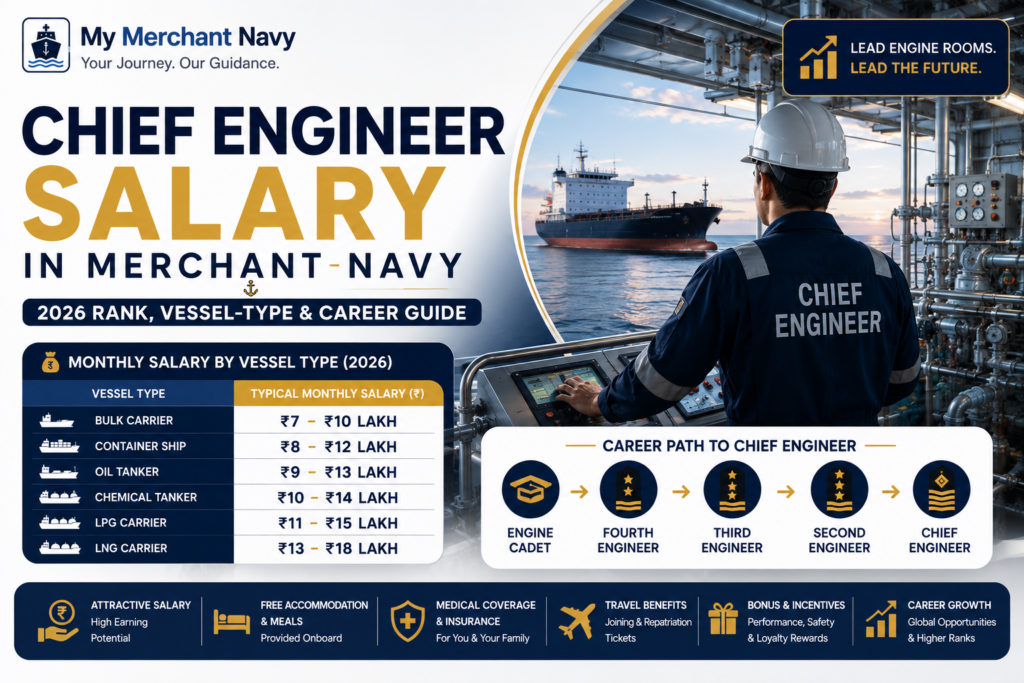
The Chief Engineer sits at the top of the engine department — full technical command of a ship’s machinery, DGS compliance, and the officer most directly responsible for the vessel actually running. It’s also one of the two highest-paying ranks in the merchant navy, alongside Captain. This guide covers what Chief Engineers actually earn, how vessel type changes the number, and the career path to get there.
The Chief Engineer holds full technical command of a vessel’s engine department — overseeing propulsion machinery, electrical systems, auxiliary equipment, and all engineering staff on board. Responsibilities include managing DG Shipping (DGS) compliance, optimising machinery performance, budgeting for engine department spares and maintenance, and reporting directly to the Captain on all technical matters. It’s the culmination of the engine-department promotion ladder: Engine Cadet → Fourth Engineer → Third Engineer → Second Engineer → Chief Engineer, typically reached after 10–15 years of accumulated sea time and successive Certificate of Competency (CoC) exams issued by DGS.
Salary figures for this rank vary more than almost any other in the merchant navy, because sources blend different things — some quote base pay only, others include bonuses and allowances; some quote domestic Indian companies, others international; and vessel type moves the number substantially either way. Rather than picking one figure, here’s the range as reported across multiple current sources:
Source pattern | Reported Chief Engineer range (per month) |
Domestic/entry-level company reports | ₹4–6 lakh |
Mid-range industry estimates | ₹6.6–8.3 lakh (dry cargo specifically) |
Broader “Captain/Chief Engineer” combined estimates | ₹8.5–20 lakh |
Premium/specialised vessel reports | ₹10–18 lakh+ |
Top-end LNG-specific reports | Up to $20,000/month (≈₹16.8–18.8 lakh at ₹84–94/USD) |
The realistic takeaway: a Chief Engineer on a standard bulk carrier or general cargo vessel with an Indian or mid-tier company should expect somewhere in the ₹4–8 lakh/month range, while a Chief Engineer on a premium vessel type (LNG, LPG, chemical tanker) with a top-tier international company can realistically clear ₹12–20 lakh/month — with the highest-end outlier reports going beyond that on the very largest gas carriers with steam or dual-fuel qualifications.
Vessel type is the single biggest lever on Chief Engineer pay, more so than almost any other rank on the ship:
The pattern holds industry-wide: LNG > LPG/Chemical > Oil Tankers > Container > Bulk/General Cargo, roughly in that order of pay premium, though exact percentages vary by company and reporting source.
A few structural reasons explain why the LNG premium specifically is so large and so consistently reported:
Reaching Chief Engineer generally follows this sequence:
Salary escalates meaningfully at each CoC level, not just with time served — clearing the next competency exam is what unlocks the next pay band, more than tenure alone.
Seafarer income, including Chief Engineer salary, is tax-exempt in India for those who qualify as Non-Resident Indians (NRI) under the applicable seafarer tax rules — generally requiring 183+ days spent outside India in a financial year due to sea service. This is a significant practical advantage at this pay level, since it means the reported monthly figures are often the actual take-home amount rather than a pre-tax number.
On most standard vessel types, Captain and Chief Engineer pay run roughly comparable, with Captain generally holding a slight edge given overall vessel command responsibility. The exception is gas carriers — on LNG and LPG ships specifically, a Chief Engineer with steam or dual-fuel expertise can match or exceed a Captain’s pay, since that specific technical skill set is scarcer and more valuable to the company than general command experience on that vessel type.
Vessel type explains the biggest swings, but a few other factors consistently show up across salary reports as meaningful secondary drivers. Company tier matters enormously — top-tier international operators like Maersk, Anglo-Eastern, and Synergy are repeatedly cited as paying premium rates compared to smaller domestic or budget operators, sometimes by a wide margin at the same rank and vessel type. Specialised certifications also move pay directly — advanced STCW endorsements, steam plant qualifications, and dual-fuel engine experience each put a Chief Engineer in a higher negotiating bracket, particularly for gas-carrier postings where that expertise is scarce. Finally, route and contract length play a role: officers on longer international routes and multi-month contracts on premium vessel types tend to report higher effective monthly earnings than those rotating through shorter domestic or coastal assignments.
Reported figures vary widely by source, vessel type, and company — realistically ₹8-10 lakh/month on standard cargo vessels with mid-tier companies, rising to ₹12–20 lakh/month on premium vessel types like LNG with top-tier international companies.
LNG carriers are consistently reported as the highest-paying vessel type for Chief Engineers, followed by LPG and chemical tankers, then oil tankers, container ships, and bulk carriers.
Typically 10–15 years of accumulated sea service and successive Certificate of Competency exams, starting from Engine Cadet through Fourth, Third, and Second Engineer.
Yes, for those qualifying as NRI seafarers under applicable tax rules — generally requiring 183+ days at sea outside India in a financial year.